Tel : (+33) 4 94 63 18 08
9am - 6pm from Monday to Sunday


All products Piet Mondrian • Products of the topic Umbrellas
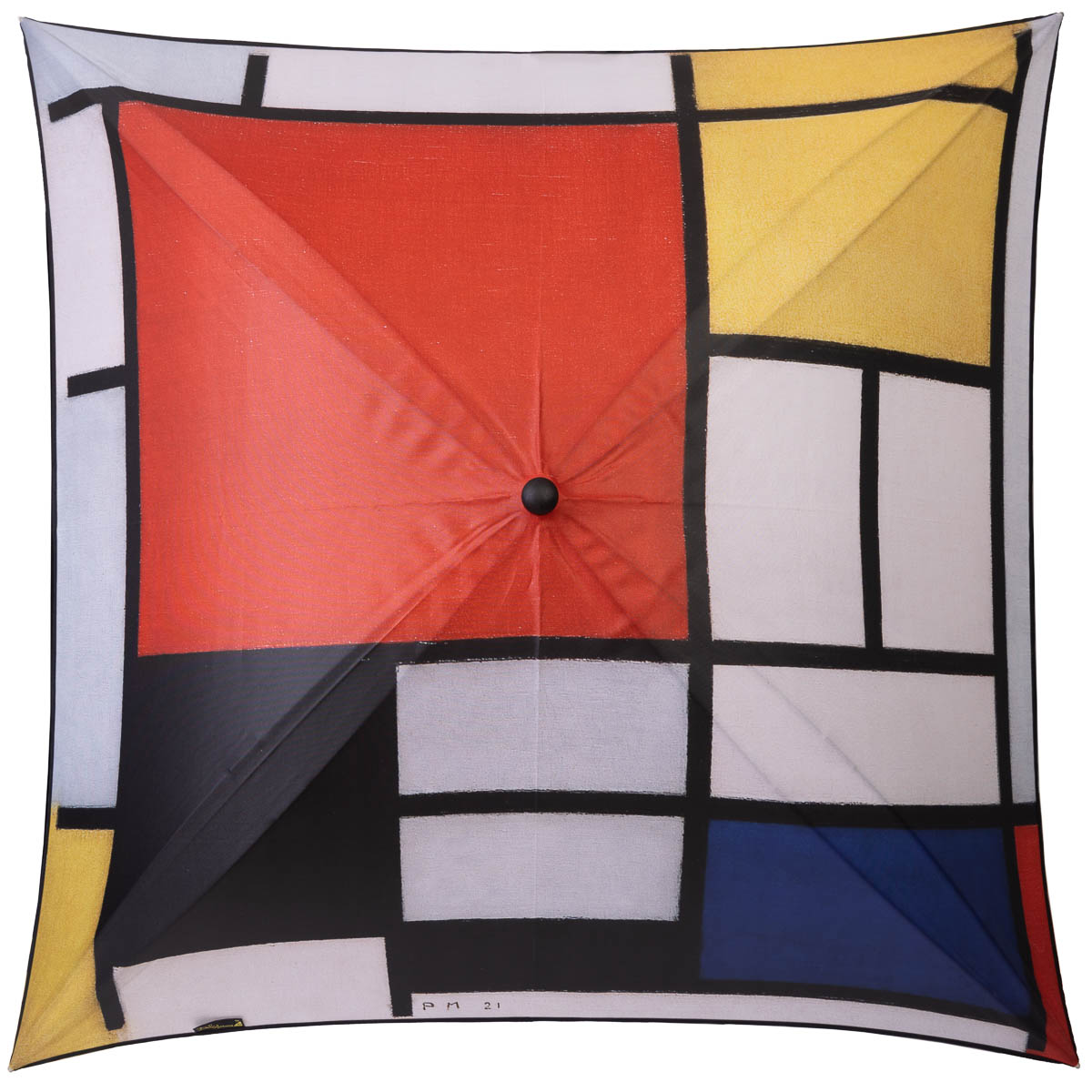
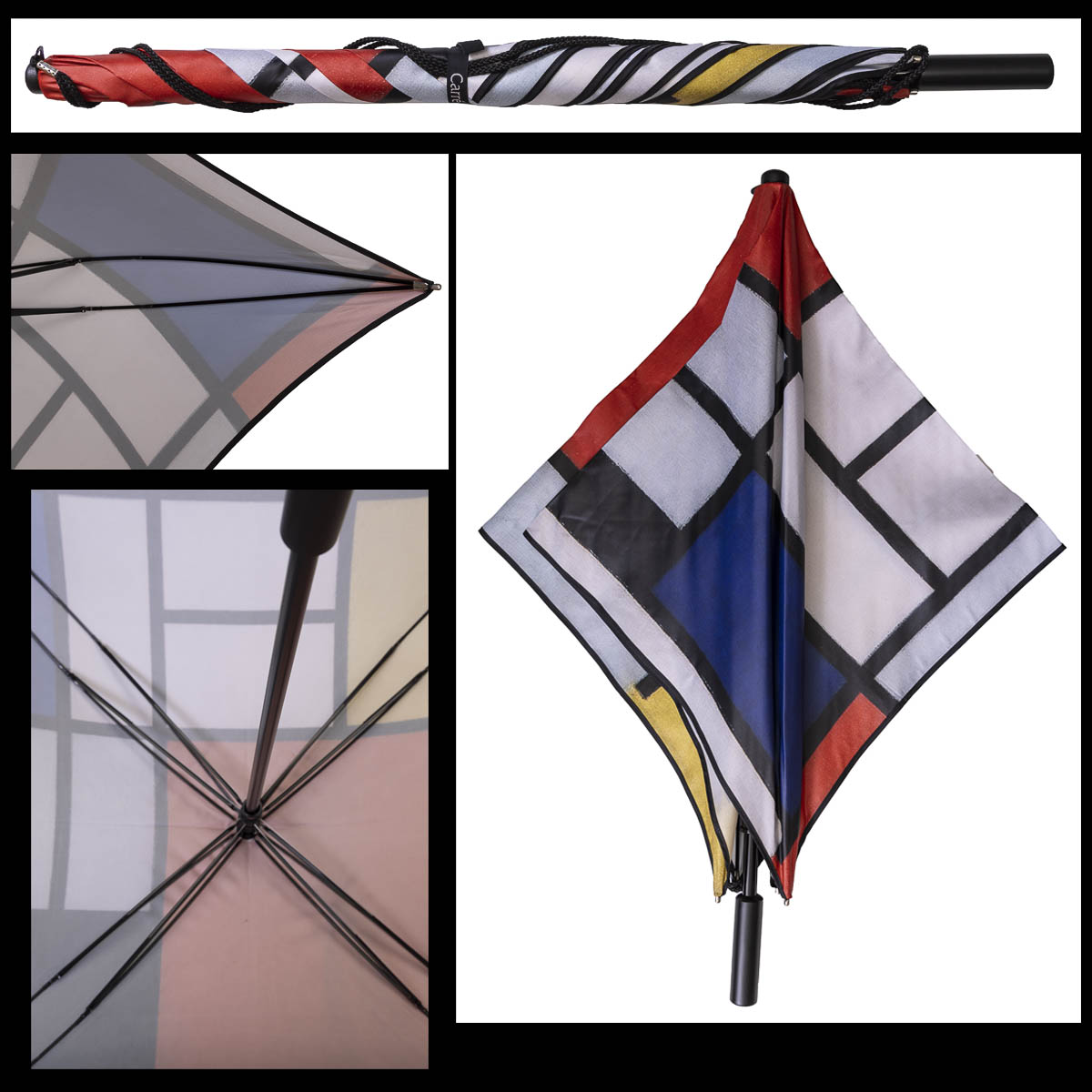


Artistic Square Umbrella - Piet Mondrian: Composition
99,00 €
REF : PARAD-PM01
In stock
Only 1 in stock
Unavailable
Artistic Square Umbrella - Piet Mondrian: "Composition"
Dimensions: 87 x 87 cm
Canopy: square, seamless, high-quality, made from 100% polyester fabric
Umbrella length: 77 cm
Weight: ultra-light, only 400 g
Very sturdy: double-ribbed frame
Waterproofing: Teflon-coated; its waterproof rating ranges between 180 and 200 Schmerber (waterproofness unit)
Its printing, by sublimation, makes the inks UV-resistant, so the umbrella can also be used as a parasol
Modular (the canopy, shaft and handle can be changed by the customer in a few seconds)
Made in France
The Carré Delos received the Gold Medal at the 2001 Lépine Competition (patented and trademarked)
Robust, elegant, technically innovative and aesthetically perfect, the Carré Delos is simplicity in the service of fashion.
So forget the plain umbrellas of yesteryear and opt for the modern and most artistic umbrella that will make you proud if it’s yours or delight the person you give it to. Entirely made in France, this everyday object turned work of art—chic and refined—will please you and attract everyone's admiration.
Discover the artist's categories




Biography of Piet Mondrian

Piet Mondrian
Pieter Cornelis Mondriaan was born on March 7, 1872, in Amersfoort, Netherlands. The son of a schoolteacher, he initially considered becoming an art teacher before abandoning the idea to express himself solely as a creator.
Mondrian's intellectual and spiritual approach completely underpins his painting.
After an early period during which Van Gogh and Van Dongen strongly influenced his style, he quickly "radicalized," moving towards a painting where the concern for simplification is the primary creative driver. "The Mill in the Sun" is one of the early examples. Light is treated using primary colors, and the forms are already highly schematized.
But it is in absolute simplification that Mondrian found his true path. Rigor, as well as mathematics and theosophy, were the milestones of his research, which ultimately led, pictorially, to a mixture of "non-colors" (black, white, and gray) and primary colors (red, blue, and pale yellow). The former are used to trace vertical or horizontal lines, while the latter fill some of the spaces formed by the lines.
As a proponent of Abstraction, having been influenced by Fauvism, Symbolism, or Analytical Cubism, Mondrian developed his own theories to develop a pictorial art of which he is the principal (if not the sole) representative, although his theories have found numerous echoes both among the painters of his time (notably at the Bauhaus) and among architects (including Frank Lloyd Wright) and modern designers.
Mondrian passed away in New York in 1944, leaving his final painting "Victory Boogie-Woogie" unfinished.
(c) Natacha PELLETIER for PASSION ESTAMPES